
Slab Leaks could be under your house right now
Of all the plumbing problems an El Cajon homeowner can face, slab leaks are among the most serious. Not because they’re the most dramatic or the most visually obvious, but because they’re exactly the opposite. They’re quiet. They’re hidden. They can go undetected for months while water slowly undermines your foundation, warps your floors, and feeds mold growth inside walls you can’t see.
If you’ve started noticing something off in your home and can’t quite put your finger on what’s causing it, a slab leak might be the answer. Here’s what you need to know.
What Is a Slab Leak?
A slab leak is any leak that occurs in the water supply or drain lines that run beneath your home’s concrete foundation. Most homes in El Cajon are built on concrete slab foundations rather than raised foundations with crawl spaces, which means the plumbing is embedded in or runs directly beneath that concrete. When a pipe down there develops a crack, a pinhole, or a failed joint, water starts escaping into the ground or into the slab itself.
The concrete that’s supposed to protect those pipes also makes them nearly impossible to monitor or inspect visually. By the time you have any outward sign of a problem, the leak has typically been going on for a while.
Why El Cajon Homes Are Especially Vulnerable
Slab leaks can happen anywhere, but certain conditions make them more likely. El Cajon checks several of those boxes in ways that homeowners should understand.
The valley terrain. El Cajon sits in a valley surrounded by hills, and the soil in valley floors is more prone to movement than soil in flatter terrain. Seasonal cycles of drought and rainfall cause the ground to expand and contract over and over through the years. That constant movement puts stress on the pipes embedded beneath your foundation. Over time, even a small amount of repeated shifting is enough to cause a pipe to crack or a joint to separate.
Hard water corrosion. El Cajon’s water supply is high in minerals, and those minerals accelerate corrosion inside copper pipes from the inside out. Many older homes in El Cajon still have their original copper supply lines, and the combination of age plus mineral-aggressive water creates pipes that are increasingly vulnerable to pinhole leaks. When those pinholes develop beneath a concrete slab, the result is a slab leak.
Aging pipe materials. Homes built in El Cajon between the 1950s and the 1970s were often plumbed with materials that are past their expected lifespan. Galvanized steel pipes corrode from the outside in as well as the inside out. Even copper lines from that era can reach a point where isolated repairs are no longer sufficient.
Soil pressure and pipe abrasion. As pipes shift slightly within the ground over decades, they can rub against the concrete or gravel surrounding them. That friction wears down the exterior of the pipe gradually, and eventually creates a breach.
How to Recognize a Slab Leak
This is where homeowners often feel frustrated, because slab leaks rarely give you a clear, obvious signal. You’re usually looking at a collection of subtle clues that individually might seem explainable, but together point to a leak under your floor.
Your water bill goes up without explanation. This is one of the most reliable early signals. If your usage habits haven’t changed but your bill has climbed noticeably, water is going somewhere it shouldn’t be. A slab leak can waste thousands of gallons a month before anyone notices.
You hear water running when nothing is on. Walk through your home when all faucets, toilets, and appliances are off. If you can hear the faint sound of running or trickling water, especially near the floor or in certain rooms, that’s worth investigating immediately.
Hot spots or warm areas on your floor. If a hot water line beneath your slab is leaking, the escaping water heats the floor above it. This is especially noticeable on tile or hardwood floors. You might step on a spot that feels noticeably warmer than the surrounding area.
Damp or soft flooring. Water migrating up through a slab will eventually saturate flooring materials. You might notice your carpet feeling slightly damp, your hardwood floors starting to warp or cup, or your tile grout developing unusual staining or discoloration.
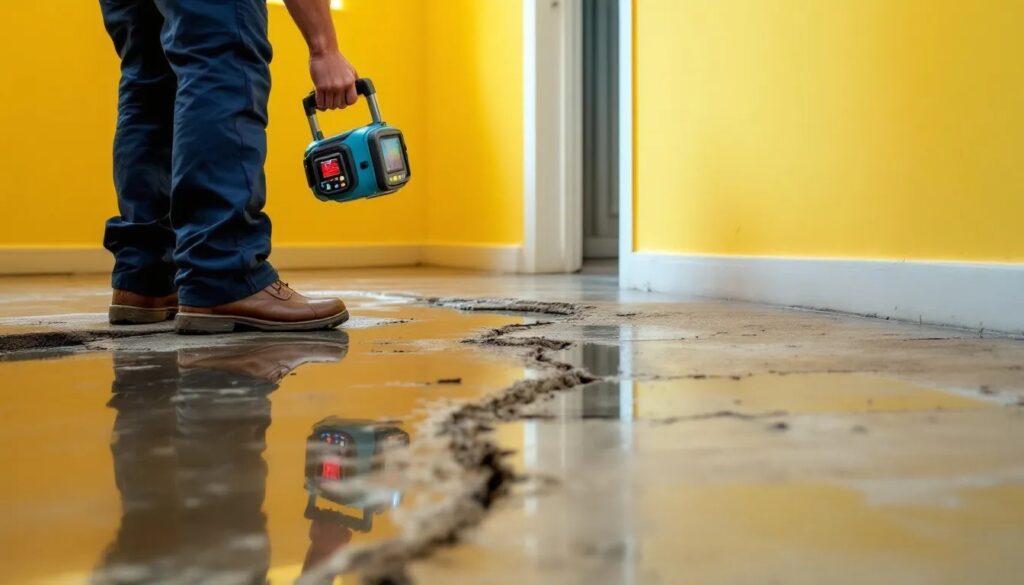
Cracks in walls or flooring. Significant water intrusion beneath a foundation can cause the slab to shift and crack. If you’re seeing new cracks appearing in your drywall or in the floor itself, especially in combination with any of the signs above, this warrants immediate professional attention.
Musty or mildew odors. Even if the water isn’t reaching the surface visibly, moisture migrating through the slab creates conditions for mold growth. A persistent musty smell in a room with no obvious moisture source can indicate a hidden leak beneath or within the walls.

What Happens If a Slab Leak Goes Unaddressed
The consequences of a slab leak that’s left alone are not minor. Water that continues to escape beneath your foundation can cause the soil to erode or shift unevenly, which in turn causes the slab itself to move or crack. This is how a relatively contained plumbing problem becomes a structural issue for the entire home.
Beyond the foundation, prolonged moisture creates an ideal environment for mold. Mold growth inside walls and beneath flooring is expensive to remediate and carries real health implications, particularly for anyone in the household with respiratory sensitivities. The longer the leak goes, the more mold has time to establish itself.
Flooring materials, baseboards, and cabinetry are also at risk. Water that migrates upward through or around the slab reaches these materials and causes them to swell, warp, or rot. In serious cases, flooring replacement across entire rooms becomes necessary.
How Slab Leaks Are Detected and Repaired
The most important thing to know about slab leak detection is that it requires professional equipment. There’s no reliable way for a homeowner to pinpoint a slab leak without the tools that licensed plumbers use.
At Voyager Plumbing, we use a combination of methods to locate slab leaks without unnecessary destruction to your home.
Acoustic listening devices can detect the sound of water escaping a pressurized pipe beneath the concrete. Even through a slab, experienced technicians can hear and triangulate the leak location.
Thermal imaging cameras detect temperature differences at the surface of the floor that indicate where hot water is escaping below. This is particularly effective for hot water line leaks.
Electronic leak detection and pressure testing allow plumbers to isolate specific sections of the water supply system and identify where pressure is dropping, narrowing down the location of the leak systematically.
Once the leak is located, repair options depend on its position, extent, and the condition of the surrounding pipe. The most common approaches are:
Spot repair through the slab. If the leak is isolated and the rest of the pipe is in good condition, a plumber can access the pipe directly by cutting through the concrete, making the repair, and patching the slab. This is the most straightforward option but requires jackhammering.
Pipe rerouting above the slab. In many cases, the preferred option is to abandon the leaking line beneath the slab and reroute a new pipe through the walls and ceiling. This avoids breaking up the floor entirely and also sidesteps the possibility of future leaks in the same buried line.
Whole-home repiping. When a slab leak is symptomatic of broader pipe deterioration throughout the home, repiping may be the most practical long-term answer. This is especially common in older El Cajon homes where the original copper or galvanized lines have reached end of life.
What to Do If You Suspect a Slab Leak
The short answer is: call a plumber today, not next week. Slab leaks are one of those problems where every day of delay has a real cost. The water continues to flow, the damage continues to spread, and the repair bill continues to grow.
If you notice your water bill spiking, hear unexplained water sounds in your home, or feel a warm patch on your floor, give Voyager Plumbing a call. We serve El Cajon and the surrounding East County communities, and we bring the detection equipment and experience needed to find the problem accurately and fix it the right way.
We’ll locate the leak, explain your repair options clearly, and help you make the decision that makes the most sense for your home and your budget. No guesswork, no unnecessary demolition, no surprises.